
Less Lethal, Not Less Reckless
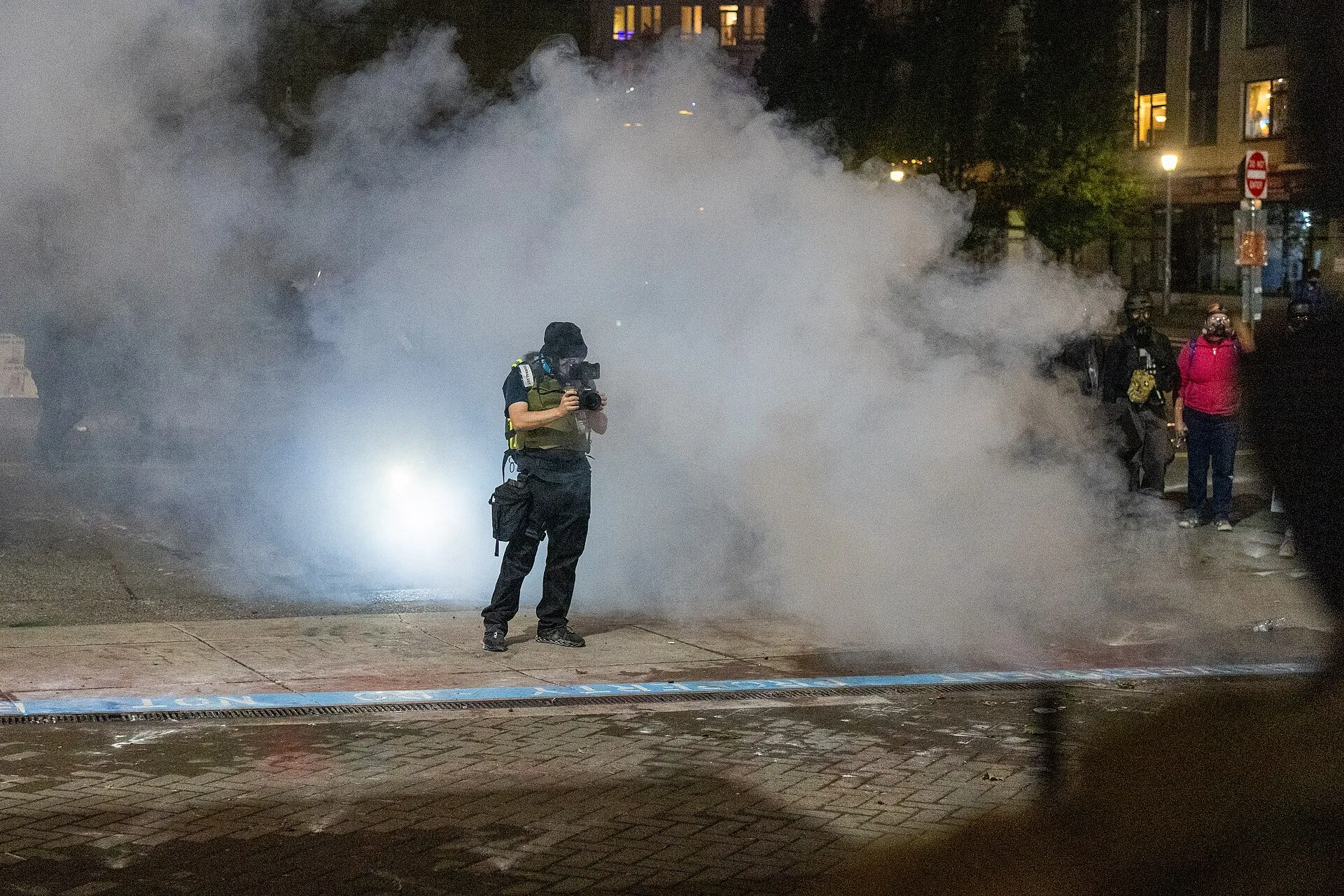
“Non-lethal” is not a property of a weapon. It’s a promise about how the weapon gets used.
A pepper ball fired at someone’s thigh from a reasonable distance hurts, coughs them up, and moves them along. The same pepper ball fired into someone’s eye from a few feet away can blind them. Same launcher. Same round. The only thing that changed is the person holding it.
So when we hand federal agents a trunk full of pepper ball launchers, 40mm launchers, tear gas, and flash-bangs, we’re trusting them to keep that promise. Over the last year and a half, the Department of Homeland Security has broken it. Over and over. On video. In front of federal judges.
I’m not asking you to take my word for that. Everything below comes from court findings, the manufacturers’ own manuals, and independent investigators. Every claim has a number in brackets, like [1]. The matching link is in the numbered list at the bottom. Click them. Check them.
The rules they were supposed to follow
Start with the people who make the gear. PepperBall prints the same warning in the manuals for its launchers: never aim or shoot at the head, face, eyes, ears, throat, or spine [1]. That’s not activist language. That’s the manufacturer covering itself, because it knows what those rounds do to a skull.
Customs and Border Protection’s own use-of-force policy says the same thing in government-speak. Deliberately targeting the head, neck, spine, or groin counts as deadly force [2]. Agents aren’t supposed to do it unless deadly force is already justified.
And ICE? According to Bellingcat, ICE’s 2023 use-of-force directive has no specific guidance on less-lethal weapons at all [2]. No public policy. Nothing you or I can hold them to.
So here’s the baseline. One agency has a written rule against head shots. The other appears to have no written rule. And the company that sells them the weapon says don’t do it, ever.
Chicago: a pastor, a rooftop, and a lie
September 19, 2025. Broadview, Illinois, outside the ICE processing center. Rev. David Black, a Presbyterian pastor from Chicago, is standing in the crowd. There are agents on the roof with pepper ball launchers.
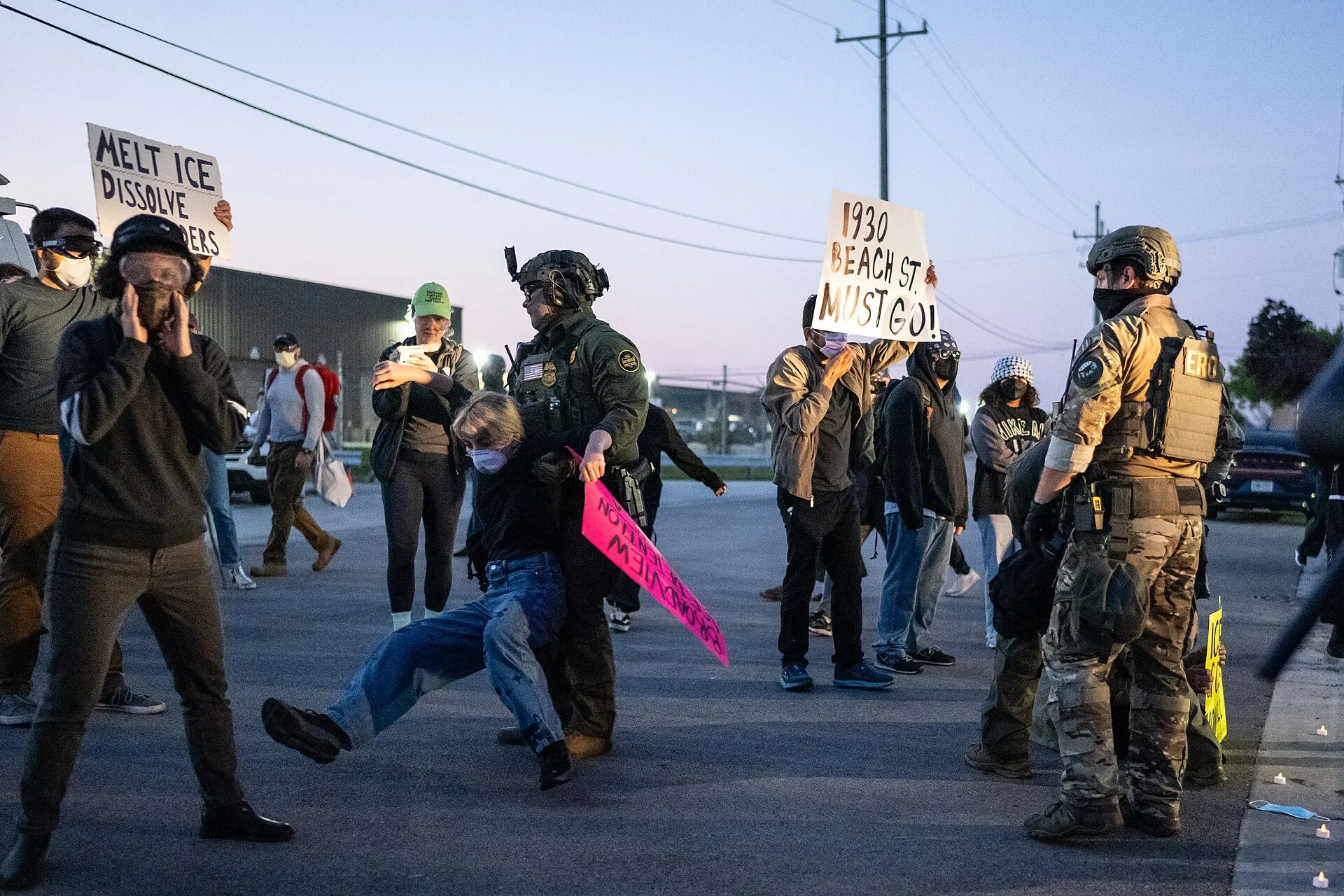
One of them opens fire. Black takes two rounds to the head and at least five more to the body. He says he was praying out loud when it happened [4]. It’s on video [3].
DHS’s response was that the protesters were blocking an ICE vehicle [5]. Black says he wasn’t, and the video shows where he was standing [4]. Either way, nothing about a blocked vehicle makes a head shot from a rooftop okay. The manufacturer doesn’t carve out an exception for being annoyed.
He wasn’t the only one. Block Club Chicago reported four of its journalists hit with pepper balls and tear gas at Broadview [6]. An agent fired a pepper ball into a CBS Chicago reporter’s car [7]. Later, Judge Sara Ellis found that Tribune and Sun-Times journalists were hit at close range with pepper balls when no protesters were even around. Agents gassed a street near an elementary school in Logan Square [8].
Then it went to court. Ellis watched hours of bodycam and helicopter footage [10]. She found the government’s witnesses weren’t credible, and that the video contradicted their accounts [9]. The big one: Border Patrol chief Gregory Bovino claimed he got hit in the head with a rock before he deployed tear gas. Video showed otherwise, and Bovino admitted the rock came after the gas [10].
Think about that. The man running the operation gave a false reason for using a chemical weapon on a crowd, and only admitted it when the video said otherwise. Ellis said the force agents used during “Midway Blitz” shocks the conscience [11].
She ordered limits: force only against an immediate threat, two clear warnings before riot-control weapons, body cameras on [9][12]. She also unsealed the agents’ use-of-force reports and hundreds of hours of their bodycam footage [13].
Portland and Los Angeles: same playbook, different judges
In Portland, Judge Michael Simon looked at the video evidence from the ICE building and described what it showed in plain terms: DHS officers spraying pepper spray straight into the faces of peaceful protesters who were offering, at most, passive resistance. Tear gas and pepper balls fired into crowds that weren’t doing anything violent [14].
Simon went further. He found the force appeared aimed at journalists and at people protesting the administration’s deportation policy [15]. That’s not crowd control. That’s picking targets based on what they’re saying. He barred agents from using these munitions unless someone posed an imminent threat of physical harm. A separate judge had already restricted gas use after residents of an affordable housing complex across the street said it was getting into their homes [16].
In Los Angeles, the LA Press Club and the NewsGuild sued DHS and Secretary Kristi Noem over what officers from ICE, CBP, and the Federal Protective Service did at protests. Nearly 50 journalists, legal observers, and protesters filed sworn declarations covering June 6 through July 10, 2025. Pepper balls. Rubber bullets. Tear gas in Maywood, Camarillo, Carpinteria. In September, the judge granted a preliminary injunction and found the agents’ force showed strong evidence of retaliation [17].
Physicians for Human Rights filed a brief in that case. Their read of the court record: federal agents went for the heads and faces of journalists and protesters with rubber bullets, and fired pepper balls and gas canisters into groups when there was no sign agents were under threat [18].
Santa Ana and Minneapolis: this is what “non-lethal” does to a face
January 9, 2026. Santa Ana, California, outside the federal building. People were protesting the killing of Renee Good in Minneapolis two days earlier.
I’ll be straight about the scene, because you’ll hear about it anyway. By that point most of the crowd had left. A smaller group stayed. Someone burned a flag [19]. Santa Ana police say people threw orange cones at agents [20]. DHS says it was rocks, bottles, and fireworks [21].
Agents grabbed one protester and dragged him off. Kaden Rummler, 21, ran toward them with a megaphone. An agent fired a less-lethal round into his face from close range. He lost the sight in his left eye [20]. His skull was fractured [22]. His tear duct was destroyed, and surgeons had to take skin from his temples to rebuild his eyelid [19].
You can believe every word of DHS’s version and it still doesn’t matter. Cones or bottles, there is no reading of any policy where a point-blank face shot on a guy holding a megaphone is “less lethal.” That’s the exact thing every manual says not to do.
In Minneapolis that same month, after Good was killed, a CBP officer was filmed firing a 40mm launcher five times in under five minutes. Several of those shots appear aimed at protesters’ faces. That’s against CBP’s own policy, the one with the rule about heads [2].
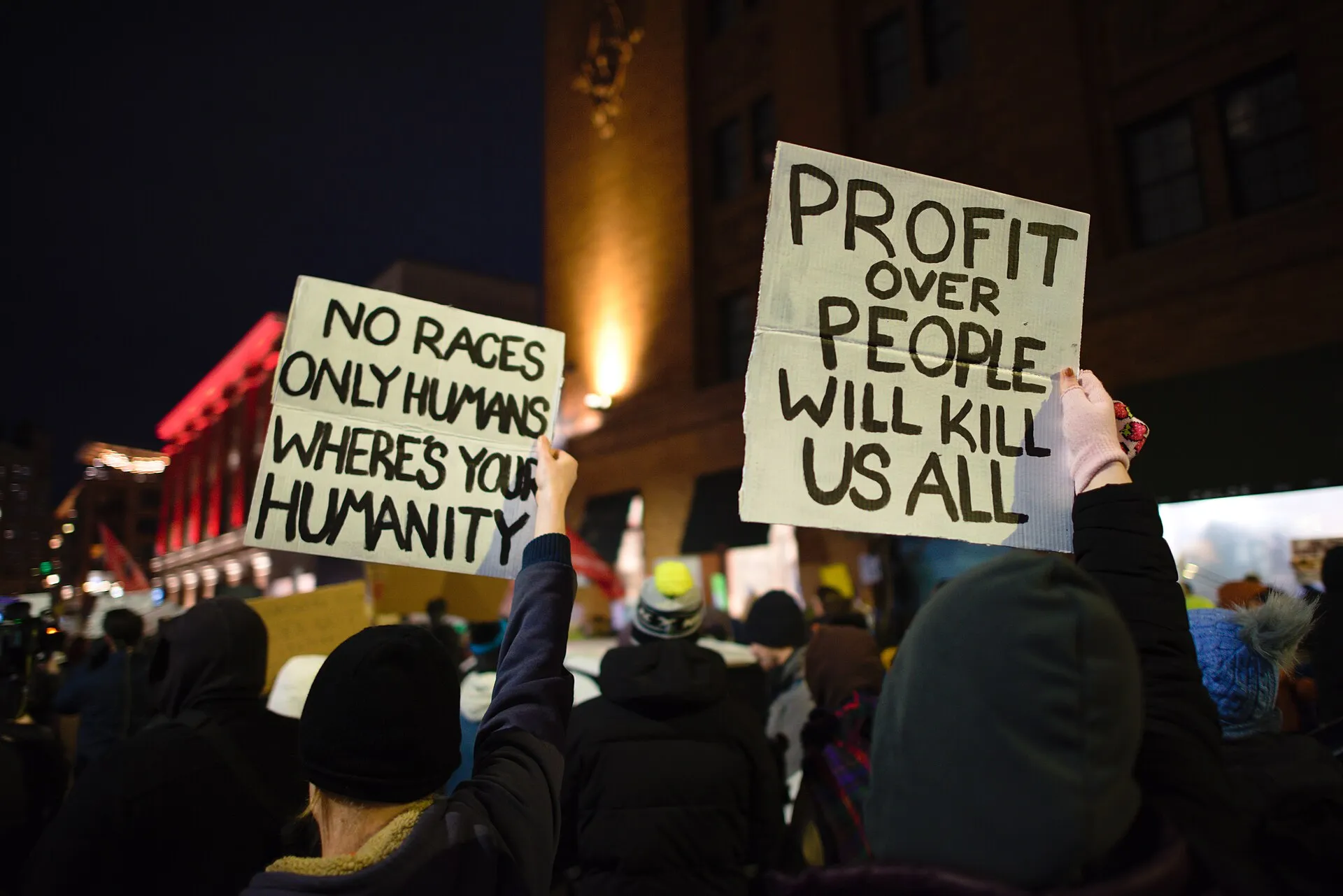
ProPublica and FRONTLINE documented another Minneapolis scene for their investigation “Caught in the Crackdown.” Agents had a man stopped. Neighbors came out. Someone threw a snowball. An agent answered with a tear gas canister into the crowd. Another fired pepper balls and hit ProPublica reporter A.C. Thompson three times, once above his right eye. As the agents drove off, one sprayed pepper spray out of the car window, hitting the film crew, including the director, and spraying the director of photography in the face [23].
A snowball.
It’s not a few bad apples. It’s the orchard.
If this were a handful of viral clips, DHS could call it isolated. It isn’t.
Physicians for Human Rights and UC Berkeley’s Human Rights Center went through the publicly available video from immigration protests since early 2025 and catalogued what they found. Their bar for “misuse” was simple: did the use break international standards, the manufacturer’s instructions, or the agency’s own policy? Or did it hit a protected group like journalists, medics, or legal observers? [24][25]
They found hundreds of cases. DHS employees, including ICE and CBP, were responsible for most of them. 175 involved journalists. The most common violation was firing from too close. They also logged many cases of these weapons used in enclosed spaces or situations people couldn’t escape [24].
And heads. A significant number of shots hit people in the head, causing contusions, traumatic brain injuries, hearing loss, and eye injuries. The researchers said the volume suggests agents aimed at heads either on purpose or out of recklessness. I’m not sure which of those is supposed to make me feel better.
Two more findings stuck with me. Violations got worse when Bovino was on scene. And in most incidents, the protest was peaceful before the weapons came out. The researchers also say their count is probably low, because they could only work with the video that exists. [24]
What DHS says, and what the appeals courts did
DHS’s position is consistent. When asked about the PHR report, a spokesperson said the pattern isn’t law enforcement using force, it’s violent agitators attacking officers. The department says being near unlawful activity comes with risks and that officers take reasonable precautions. [24]
It’s also true that two appeals courts pulled back the limits the lower courts imposed. The Seventh Circuit put Judge Ellis’s injunction on hold, calling it overbroad and too prescriptive. But the same panel told readers not to overread its order, and called Ellis’s factual findings “voluminous and robust” [26]. In Portland, a 2-1 Ninth Circuit panel lifted the restrictions on federal officers there, with the majority worried that the limits would make officers hesitate [27].
You should know both of those things. But read what those rulings were about. They argued over how far a judge can go in telling federal agents how to operate. They didn’t put the video back in the box. Bovino still admitted the rock came after the gas. Rummler still lost his eye. Rev. Black still took two pepper balls to the head on camera.
And “agitators” doesn’t explain a pepper ball fired into a reporter’s car, journalists hit with no protesters nearby, or a film crew pepper sprayed from a moving vehicle.
Banned on the battlefield, legal on your block
Here’s something most people don’t know. Tear gas is banned in war.
The Chemical Weapons Convention, which the U.S. signed, says countries can’t use riot control agents as a method of warfare [32][34]. That covers tear gas and the pepper chemicals in pepper spray and pepper balls. The ban isn’t just on using them against civilians. It covers enemy soldiers too.
But the same treaty carves out an exception for law enforcement, including domestic riot control [32][34]. So the U.S. military can’t gas an enemy soldier. Federal agents can gas a neighborhood in Minneapolis.
The rest of the kit, the rubber bullets, the flash-bangs, the 40mm rounds, isn’t banned in war. But in a war, deliberately aiming any weapon at civilians who aren’t fighting is a war crime under the Rome Statute [33]. A pastor praying outside a building. A reporter holding a camera. A 21-year-old with a megaphone.
To be clear, this isn’t a war, and nobody’s being charged with war crimes. That’s exactly my point. Our own military plays by stricter rules against enemy soldiers than federal agents are playing by against Americans at home.
Now add a heat ray
Last month, Defense Secretary Pete Hegseth signed a memo loaning DHS one Active Denial System for seven months, starting in September. CNN got the memo [28]. The system is a military heat ray. It fires an invisible beam of 95 GHz millimeter waves [30] that reaches about half a mile, and Pentagon officials have compared the feeling to opening a hot oven [28].
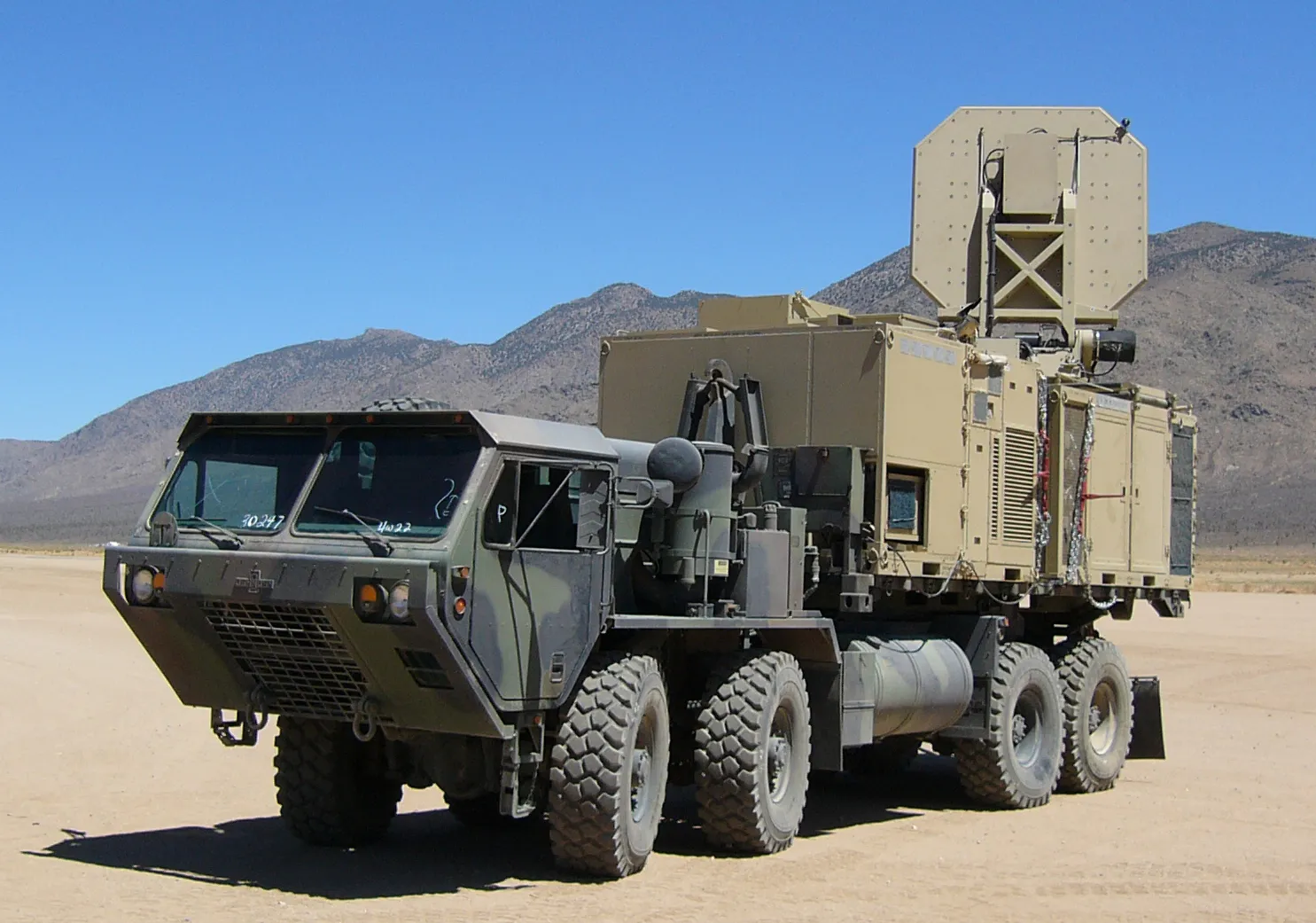
It isn’t new. The Pentagon built it in the 1990s [30]. The military sent it to Afghanistan nearly two decades ago, and never used it in combat. It also considered using it for crowd control at overseas facilities holding terrorism detainees, and decided against that too [28].
And this isn’t the first time DHS has wanted it. In 2018, CBP officials considered using it on migrants, and the Homeland Security Secretary at the time, Kirstjen Nielsen, said no [28][29]. A former DHS official told CNN the problem was treating immigrants and citizens like enemy combatants [28]. Officials also considered using it during domestic unrest, including the protests after George Floyd’s murder, according to a former U.S. official [28][31].
Think about that. The military passed on using it against detainees. A Trump-era DHS secretary rejected it as treating people like enemy combatants. Now it’s on loan to DHS.
The memo covers testing for possible use in operations at the southern border. But DHS’s request didn’t say where or how it would be tested, or how it might eventually be used. The memo also says Pentagon personnel won’t operate it. DHS alone is responsible for how it’s used and for writing the tactics and procedures for using it [28].
Read that again with everything above in mind. The same department whose agents put pepper balls into a pastor’s head, blinded a 21-year-old at point-blank range, and lied about a rock to justify gassing a crowd. The same department that, as far as anyone can tell, never published a less-lethal policy for ICE. That department now gets to write the rulebook for a weapon that makes your skin burn from about half a mile away.
So I’ll ask you one simple question.
After all of this, do you think the heat ray will be used properly?
Sources
- [1] PepperBall launcher manual (safety warnings)pepperball.com
- [2] Bellingcat, less-lethal weapons used by DHSbellingcat.com
- [3] KTVU, video of pastor shot in headktvu.com
- [4] NewsNation, Rev. David Black interviewnewsnationnow.com
- [5] The Hill, DHS defends officerthehill.com
- [6] Block Club Chicago, judge rules on journalistsblockclubchicago.org
- [7] Yahoo, CBS reporter’s caryahoo.com
- [8] Yahoo / Fox 32, Ellis injunction findingsyahoo.com
- [9] Reuters via Yahoo, judge rejects riot claimsyahoo.com
- [10] Ticklethewire, Bovino admitted he liedticklethewire.com
- [11] WTTW, “shocks the conscience”news.wttw.com
- [12] NBC News, Chicago injunction termsnbcnews.com
- [13] WTTW, bodycam footage unsealednews.wttw.com
- [14] NBC News, Oregon judge restricts tear gasnbcnews.com
- [15] Yahoo, Simon on targeting journalistsyahoo.com
- [16] Oregon Capital Chronicle, housing complex caseoregoncapitalchronicle.com
- [17] LA Press Club v. Noem injunction (court order PDF)courthousenews.com
- [18] Physicians for Human Rights, LA amicus briefphr.org
- [19] KTLA, Santa Ana eye injuryktla.com
- [20] Raw Story, protester permanently blindedrawstory.com
- [21] FOX 11 Los Angeles, full DHS statement on Santa Anafoxla.com
- [22] Common Dreams, skull fracturecommondreams.org
- [23] ProPublica / FRONTLINE, “Caught in the Crackdown”propublica.org
- [24] Capital & Main via Times of San Diego, PHR/Berkeley reporttimesofsandiego.com
- [25] PHR / UC Berkeley, “Charting the Crackdown”phr.org
- [26] Courthouse News, Seventh Circuit staycourthousenews.com
- [27] Newberg Graphic, Ninth Circuit lifts Portland limitsnewberggraphic.com
- [28] CNN, Pentagon lets DHS test heat raycnn.com
- [29] Military.com, DOD memo and Nielsen’s 2018 refusalmilitary.com
- [30] Stars and Stripes, heat ray specs and historystripes.com
- [31] WLOS / The National Desk, heat ray and past domestic-unrest discussionswlos.com
- [32] Arms Control Association, riot control agents and the Chemical Weapons Conventionarmscontrol.org
- [33] Rome Statute (official ICC text; war crimes are Article 8)icc-cpi.int
- [34] 10TV Verify, tear gas banned in war but allowed for police10tv.com
Image credits
- Top: 20251004 ICE Portland EJK-221, U.S. Immigration and Customs Enforcement. Public domain.
- Broadview: Photo on Wikimedia Commons, Paul Goyette, CC BY 4.0. Resized.
- Minneapolis: Protest against ICE in Minneapolis 9 January 2026, Fibonacci Blue, CC BY 4.0. Resized.
- Heat ray: Active Denial System vehicle, U.S. Air Force. Public domain.


